
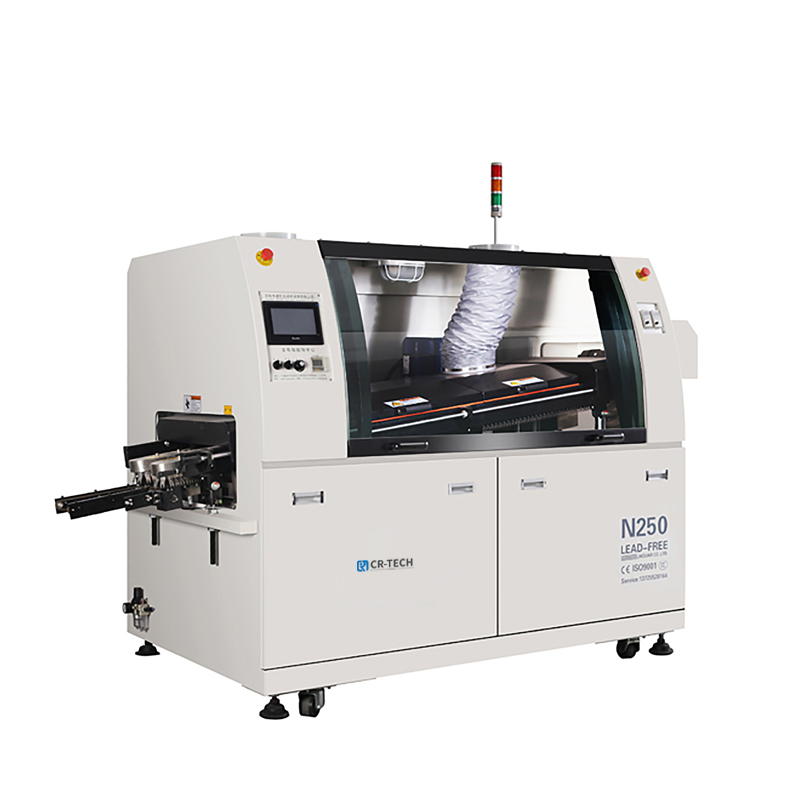
Why AOI is Non-Negotiable in Modern SMT Assembly
Why AOI is Non-Negotiable in Modern SMT Assembly
Introduction: The Silent Saboteur on Your PCB Line
In the fast-paced world of Surface Mount Technology (SMT), the difference between a profitable quarter and a recall catastrophe often comes down to a single missed solder joint. As boards shrink, component pitches tighten (down to 01005 and even 008004), and production speeds exceed 100,000 CPH, human visual inspection has become obsolete. No matter how skilled, an operator’s eye cannot maintain consistency at 3 a.m. during a high-volume run.
This is where Automated Optical Inspection (AOI) transcends being a "nice-to-have" and becomes the central nervous system of quality assurance. For the modern SMT manufacturer, removing AOI from the line is not a risk; it is a guarantee of failure. Let’s examine why AOI is non-negotiable, dissecting its impact on detection efficiency, quality yield, and total cost of ownership (TCO).
Part 1: The Efficiency Factor – Beyond the Human Threshold
Time is the most expensive variable in SMT production. Traditional manual visual inspection (MVI) operates at a painfully slow rate: roughly 2-3 seconds per component, with attention spans fading after 20 minutes. Conversely, a modern 15-megapixel, 12mm FOV AOI machine inspects over 200 components per second.
However, raw speed is only half the story. True efficiency comes from integration. Modern inline AOI machines offer "real-time feedback loops." When the AOI detects a tombstone capacitor or a solder bridge on a QFN package, it doesn't just log a failure; it communicates instantly with the preceding pick-and-place machine or reflow oven. This closed-loop system allows operators to correct feeder misalignments or temperature profiles within minutes of a defect appearing, rather than hours later during final QC.
Furthermore, advanced AOI systems utilize concurrent inspection algorithms. While one camera head captures a BGA's edge, another verifies the polarity of electrolytic capacitors. This parallel processing eliminates the bottleneck that manual inspection creates. In a high-mix, low-volume (HMLV) environment, rapid changeover software allows for program switching in under 30 seconds. Without AOI, changeovers consume hours of verification time, killing your OEE (Overall Equipment Effectiveness).
Part 2: The Quality Paradigm – Detecting the "Invisible"
Quality in SMT is no longer about simply checking if a resistor is present. It is about measuring the geometry of wetting and the integrity of the fillet. Modern SMT components, such as LGA (Land Grid Array) and PoP (Package on Package), have hidden solder joints where optical access is zero. Here, 2D AOI fails, but advanced 3D AOI (using laser triangulation or Moiré fringe technology) thrives.
The mathematics of quality are brutal. If a solder paste printing process has a Cpk (Process Capability Index) of 1.0, you will generate 2,700 ppm defects. Post-reflow, these become costly rework. AOI provides the "eyes" for Statistical Process Control (SPC).
Specifically, AOI guarantees:
Solder Paste Inspection (SPI): Validates volume, height, and area before reflow. This prevents the "hidden tombstone" where components blow off due to uneven paste distribution.
Component Presence/Absence: Catches missing 01005 passives that are smaller than a grain of sand.
Polarity & Text: Verifies that a single rotated diode doesn't destroy a $500 CPU downstream.
Wettability: Identifies "cold joints" and "non-wet opens" that look shiny to the naked eye but have no electrical conductivity.
Without AOI, the industry standard defect rate of <50 DPPB (Defects Per Billion) required for automotive (IATF 16949) or medical devices is unattainable.
Part 3: The Cost Trap – Why AOI Saves Money (It’s not just about labor)
Many new factory owners look at a $50,000 AOI machine and ask, "Why not just hire 10 inspectors for a year?" This is the "False Economy Fallacy." The true cost of manual inspection is hidden in three specific zones:
A. The Escaped Defect Cost (10,000)
B. The Rework Tax
C. The False Call Ratio
Part 4: The Supply Chain Reality
Modern contract manufacturers (CMs) are being forced by OEMs to provide traceability. Without AOI, you cannot provide the "Golden Board" data required for PPAP (Production Part Approval Process). AOI generates a digital twin of every board—every measurement, every component shift. If a failure occurs in the field 18 months later, the AOI log proves whether the defect was a manufacturing error or a design flaw. Without this data, the manufacturer assumes liability.
Conclusion: The Zero-Defect Imperative
The era of "spot-checking" PCBs is over. With the rise of Industry 4.0, the SMT line is a continuous data stream. AOI is the sensor that reads that stream. It drives efficiency by closing the loop with placement machines, ensures quality by measuring 3D solder geometry, and reduces total cost by killing the "Escaped Defect" liability.
For a factory aiming for Zero Defect manufacturing, the question is no longer "Should we buy an AOI?" but rather "Can we afford an SMT line that doesn't have one?"
In the battle against miniaturization and speed, the naked eye has lost. AOI is the only scalable, reliable path to profitability in modern SMT assembly.
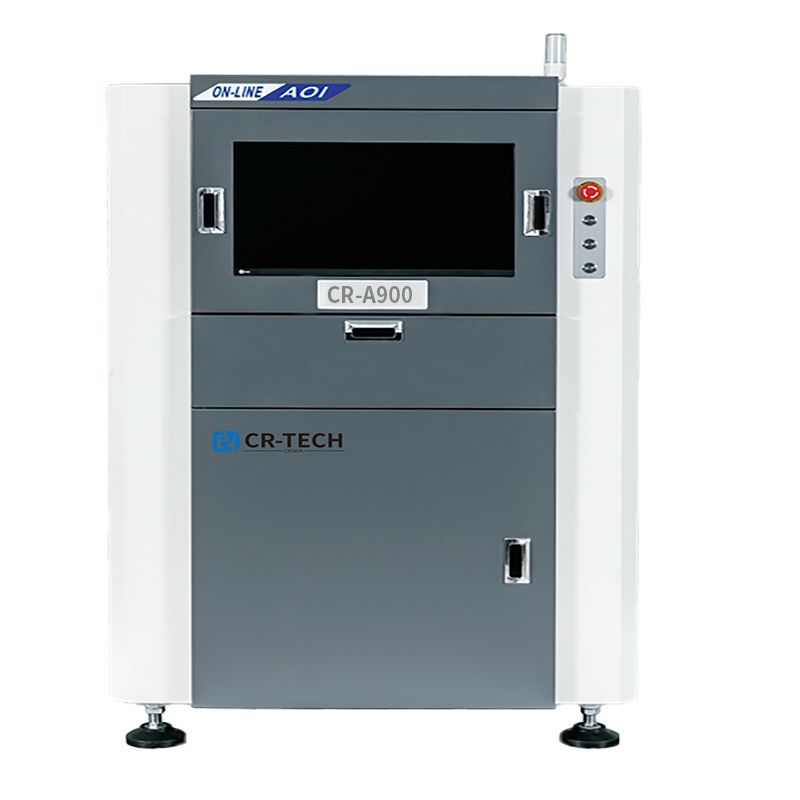
The "Rule of 10" in SMT states: It costs 10 to find it at post-reflow AOI, 10,000 if it reaches the field (customer). Manual inspection at the end of the line catches only 65-75% of defects. AOI catches 99.9%+. A single escaped defect causing an automotive airbag failure costs more than the AOI machine itself.
Reworking a PCB isn't free. It consumes solder wick, flux, hot air station time, and risks damaging adjacent components. AOI prevents "rework cascade"—the phenomenon where fixing one bridge accidentally creates a tombstone two centimeters away. By catching defects early (post-paste or post-placement), AOI allows for immediate rework rather than scrap.
Low-end AOI might flag 5,000 false defects per shift, requiring operators to verify every one, wasting time. Modern AI-driven AOI utilizes "Deep Learning" algorithms. These systems learn your specific PCB design and board color variations. They reduce false calls by up to 80%, lowering the "Cost of Verification" to near zero. You aren't paying for the machine to be strict; you are paying for it to be accurate.