
SMT Stencil Printers Classification, Principles, and Future Trends
SMT Stencil Printers: Classification, Principles, and Future Trends
SMT stencil printing remains the single most critical process in solder paste deposition, directly influencing yield in modern PCB assembly. As boards shrink and component pitches tighten, the capability of the stencil printer sets the ceiling for overall line performance. For equipment operators and production managers, understanding how these machines are classified, how they work, and where the technology is heading is essential for making informed investment and process decisions.
Classification by Automation Level
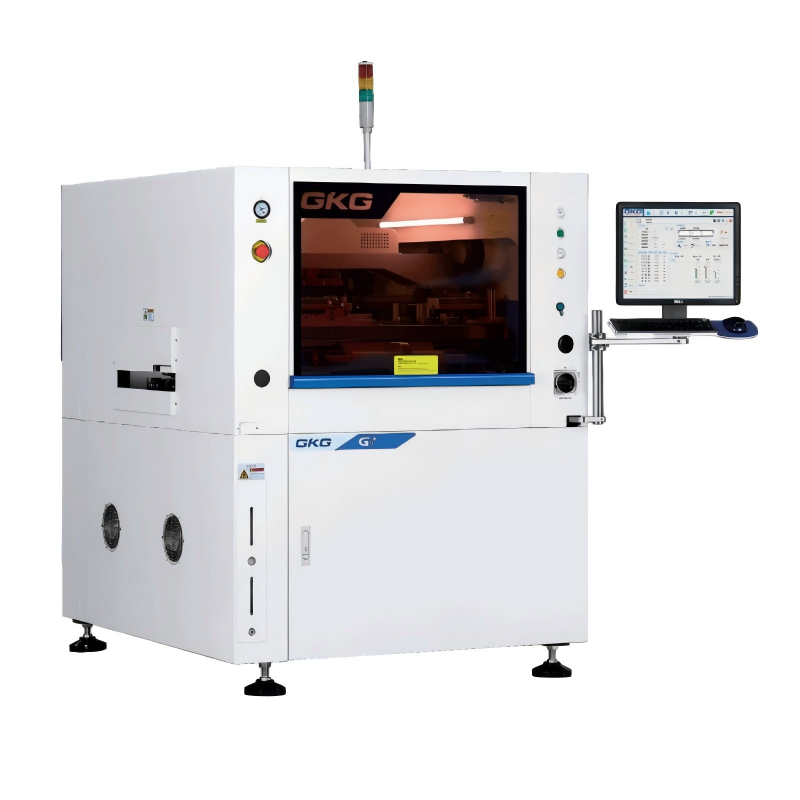
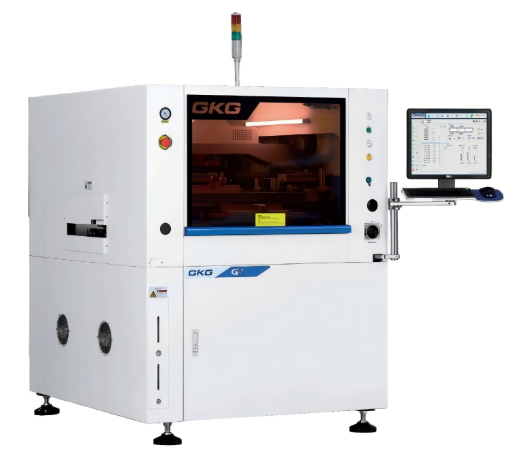
SMT stencil printers are generally grouped into three categories based on automation and application scale. Manual printers rely entirely on operator skill for board loading, stencil alignment, and squeegee movement. They persist only in low-volume prototyping or regions with minimal labor costs. Semi-automatic machines automate the print stroke but still require manual board placement and stencil positioning; they suit high-mix, low-volume production and trial runs where a full automated line is not justified . Fully automatic printers dominate mainstream high-volume SMT lines. These systems handle board feeding, fiducial-based vision alignment, printing, under-stencil wiping, and board transfer without operator intervention, making them indispensable for consumer electronics and automotive electronics manufacturing .
Core Working Principle
The printing mechanism is conceptually straightforward but demands extreme precision. A metal stencil, typically laser-cut stainless steel, is aligned so its apertures correspond exactly to the PCB pads. Solder paste is dispensed onto the stencil, and a squeegee moves across the surface at a controlled angle, typically 45 to 60 degrees, forcing paste through the apertures onto the pads below . Key parameters determine deposit quality: squeegee pressure (commonly 0.18–0.23 kg/cm), print speed (20–100 mm/s), and separation speed (1–3 mm/s for fine-pitch work) . Modern automatic printers use machine vision to read fiducials before each print, locking registration even at 0.4 mm BGA pitch. Under-stencil wiping cycles remove residual flux and paste to prevent bridging defects . The stencil itself is not a passive accessory—foil thickness, aperture geometry, and wall finish collectively determine paste volume and release efficiency, often outweighing machine calibration in their impact on yield .
Future Trends
Three developments are reshaping stencil printer design. First, inspection integration is becoming standard. Inline solder paste inspection (SPI) with closed-loop feedback allows printers to automatically adjust parameters based on measured deposit volumes, reducing dependence on operator intervention and improving first-pass yield . Second, AI-driven alignment and predictive maintenance are moving from concept to production floor. Advanced models use machine learning to compensate for board warpage, stencil wear, and paste rheology changes in real time, while predictive algorithms flag maintenance needs before unplanned downtime occurs . Third, Industry 4.0 connectivity transforms printers from isolated machines into data nodes. Real-time process monitoring, traceability logging, and integration with MES platforms enable manufacturers to correlate printing parameters with downstream defect rates and optimize recipes across production sites .
The market trajectory reflects these priorities. The global SMT stencil printer market is projected to grow at a CAGR of roughly 4.5–4.8% through the early 2030s, driven by miniaturization in consumer electronics, automotive ECU complexity, and 5G infrastructure demands . Asia-Pacific remains the dominant production and consumption region, while Europe and North America concentrate on high-precision applications in automotive, aerospace, and medical electronics .
For SMT equipment operators, the implication is clear: the stencil printer is no longer merely a paste applicator but an intelligent process control point. Evaluating equipment on print repeatability, SPI integration readiness, changeover speed, and data connectivity will matter as much as traditional metrics like cycle time and squeegee pressure range. Those who treat printing as a data-driven discipline rather than a mechanical step will be better positioned to meet the quality and throughput demands of next-generation electronics assembly.