
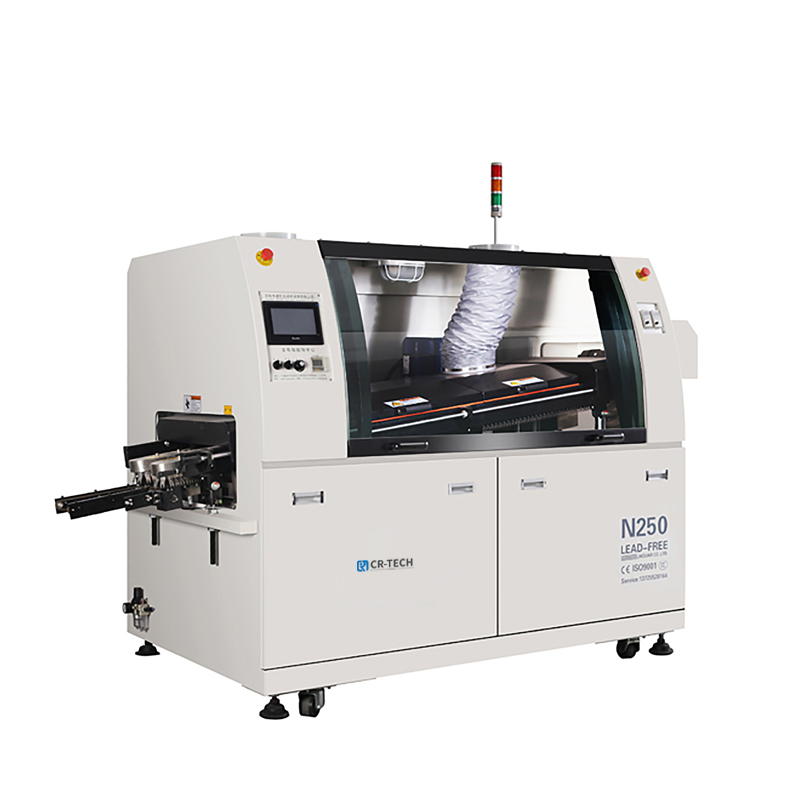
Wave Soldering vs. Selective Wave Soldering
Wave Soldering vs. Selective Wave Soldering: Key Differences & How to Choose the Right Process
As SMT assembly continues to push toward miniaturization and higher component density, the soldering of through-hole components (THCs) remains a critical challenge. For over a decade in this industry, I’ve seen many manufacturers struggle with one fundamental question: Should I invest in a standard wave soldering machine or a selective wave soldering system?
The answer isn't about which technology is "better"—it's about matching the process to your product mix, volume, and design complexity. Let’s break down the technical differences and establish a clear selection guide.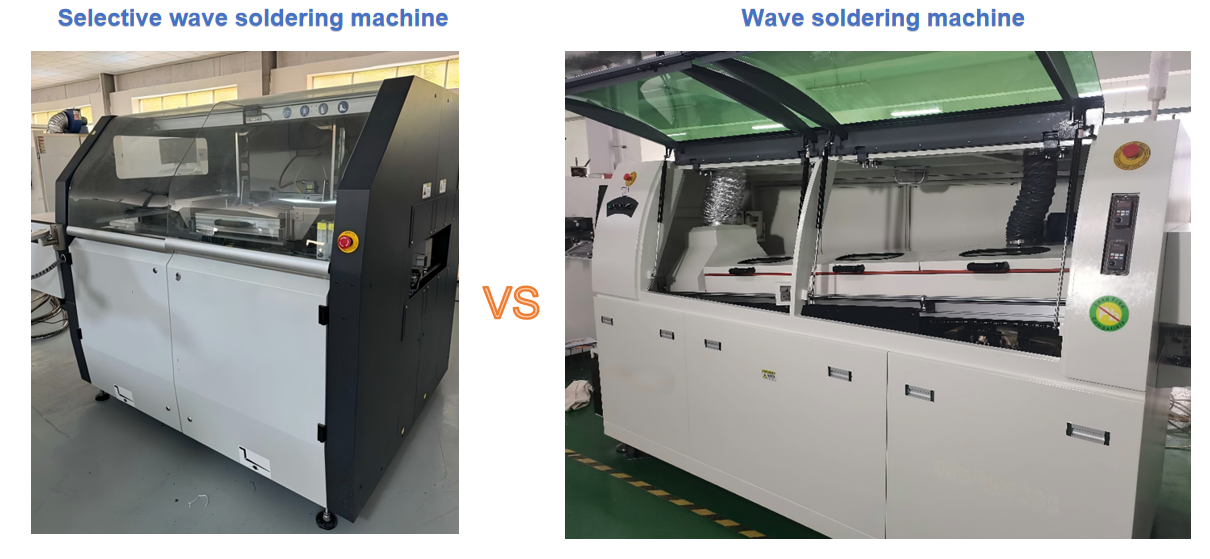
The Core Principle
Traditional Wave Soldering Machine is a mass soldering process. The entire PCB passes over a pumped wave of molten solder. All through-hole components on the bottom side are soldered simultaneously.
Selective Wave Soldering is a precision process. Only specific programmed pins or through-hole areas come into contact with a mini solder nozzle. The rest of the board remains untouched.
4 Key Differences Between the Two Processes
1. Soldering Mechanism & Masking
-
Wave Solder: Requires a pallet or masking fixtures to cover SMT components on the bottom side. The board rides on a conveyor, hits a fluxer, preheat, and then the main wave.
-
Selective Solder: No pallets needed. A robotic nozzle moves under the board (or the board moves over the nozzle). Only pre-programmed coordinates receive flux and solder.
2. Thermal Stress on PCBs
-
Wave Solder: High thermal shock. The entire board heats up during preheat and the wave contact. This can warp thin boards or damage sensitive SMT components (e.g., ceramic capacitors).
-
Selective Solder: Low thermal stress. Localized heating means only the target joint area reaches peak temperature. The rest of the board remains cool.
3. Solder Pot & Dross Generation
-
Wave Solder: Large solder pot (150–300 kg). High surface area exposure leads to significant dross (oxidation waste), typically 1-3 kg per shift.
-
Selective Solder: Small solder pot (10–30 kg). Minimal dross generation due to reduced exposure and smaller wave height.
4. Cycle Time & Throughput
-
Wave Solder: Extremely fast. A full board is soldered in 30–60 seconds. Ideal for high-volume production.
-
Selective Solder: Slower. Cycle time depends on joint count (2–5 seconds per joint). A board with 100 pins might take 3–5 minutes. Not for mass production.
How to Choose: 5 Critical Questions
Ask yourself these questions before making a purchasing decision.
Question 1: What is your bottom-side SMT density?
Choose Wave Solder if: Your bottom side has few SMT components, or you accept pallet fabrication costs.
Choose Selective Solder if: Your board is densely populated with bottom-side SMT components (0603, 0402, BGAs, QFNs). Pallets would be too expensive or impossible.
Question 2: What is your annual volume per PCB type?
Choose Wave Solder if: You produce over 10,000 identical boards per month. The high throughput justifies the tooling (pallets).
Choose Selective Solder if: You run high-mix, low-to-mid volume (100–5,000 boards/month). Changeover is program-only; no physical tooling required.
Question 3: Do you have heat-sensitive components?
Choose Wave Solder if: All components are robust (transformers, connectors, large capacitors).
Choose Selective Solder if: You have plastic housing, LED arrays, aluminum electrolytic capacitors, or vibration-sensitive crystals on the same board.
Question 4: What is your allowable defect rate (DPPM)?
Wave Solder Risks: Bridging, insufficient fill, and solder balls. However, for high-volume consumer electronics, these are manageable.
Selective Solder Risks: Non-wetting or insufficient pin fill (hole-fill). But for critical applications, it delivers near-zero bridging defects.
Question 5: Floor space and budget?
-
Wave Solder: Lower capital investment but higher ongoing costs (energy, solder, dross, pallets).
-
Selective Solder: Higher initial investment, lower consumables cost, and smaller footprint (typically 50% less length than a wave soldering line).
The Hybrid Approach – A Growing Trend
For manufacturers with mixed portfolios, the best solution isn’t “either/or”—it’s both. Many contract manufacturers (EMS) run a standard wave line for high-volume, simple boards and a selective line for prototypes, military/aerospace, or automotive boards with mixed technology.
Summary Decision Table
| Condition | Recommended Process |
|---|---|
| High volume (>10k/month), simple bottom side | Wave Soldering |
| High-mix, low volume, no tooling budget | Selective Wave Soldering |
| Boards with sensitive SMT on bottom | Selective Wave Soldering |
| Heavy connectors & thermal mass parts | Wave Soldering |
| Low DPPM requirement for bridging | Selective Wave Soldering |
| Lowest possible equipment cost | Wave Soldering |
Final Advice from an SMT Veteran
If you are setting up a new line, do not default to wave soldering simply because it is traditional. Calculate your cost per solder joint including tooling, dross, rework, and floor space.
Conversely, do not buy selective soldering just for "precision" if you are assembling 500,000 power supplies per month with two simple through-hole relays. The cycle time will kill your OEE.
The rule of thumb:
*If you need to solder more than 150 through-hole pins per board at high volume → Wave.*
If you need to solder less than 50 pins per board with mixed technology → Selective.
Choose the process that aligns with your product complexity, not just your current budget. Both technologies, when applied correctly, deliver defect-free soldering.