
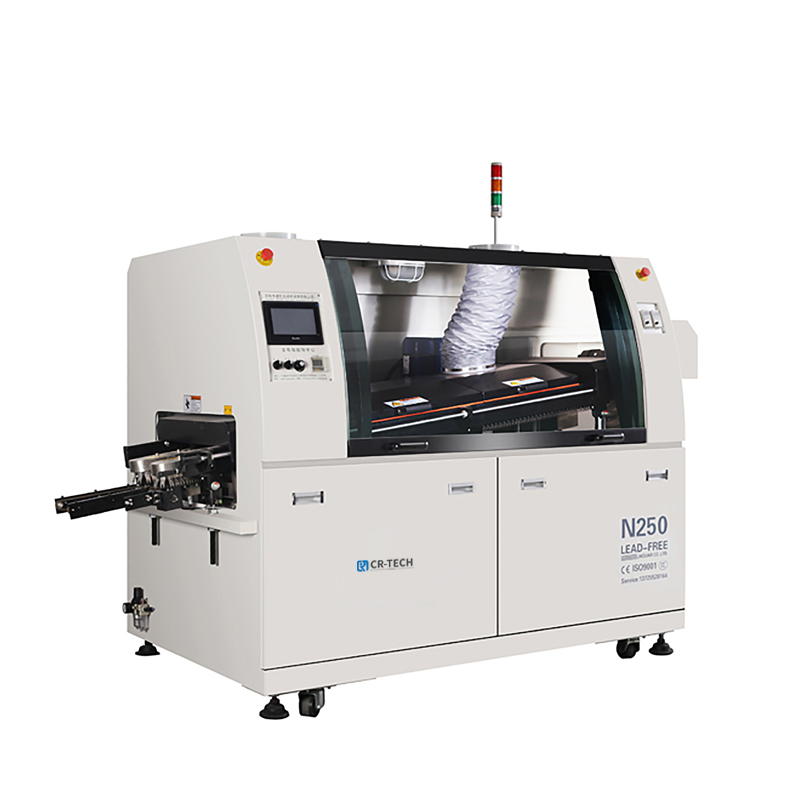
Why Conformal Coating Is Non-Negotiable for High-Reliability PCBA
Why Coating Machine Is Non-Negotiable for High-Reliability PCBA
In the world of SMT assembly, a PCBA is often viewed as "finished" after the reflow oven and AOI inspection. However, for electronics operating in demanding environments, one critical process separates short-lived prototypes from long-lasting products: Coating Machine.
As an SMT manufacturing expert, you know that even microscopic contaminants or moisture can destroy a board. Here is why precision conformal coating should be a standard step in your mid-to-high-end PCBA production line.
1. The Invisible Enemies: Moisture & Contamination
A bare PCBA is vulnerable. Residual flux (even no-clean), dust, and humidity create ionic pathways. Over time, these lead to electrochemical migration (ECM) and dendrite growth—microscopic metal "whiskers" that short-circuit adjacent pins.
Conformal coating acts as a dielectric barrier. A 50–75µm layer of acrylic, silicone, or polyurethane stops moisture from reaching the conductors. Without it, boards deployed in appliances, automotive sensors, or outdoor LED displays face premature failure due to parasitic leakage.
2. Protection Against Dust, Chemicals, and Salt Spray
Not every device is hermetically sealed. Many industrial controls, EV charging modules, and marine electronics face direct exposure to:
-
Dust and conductive particles (e.g., carbon dust from motors).
-
Chemical vapors (cleaning agents, industrial gases).
-
Salt fog (coastal or de-icing road environments).
Conformal coating encapsulates sensitive components (fine-pitch ICs, BGA peripherals, and connectors). This prevents surface contamination from bridging pads. For boards in automotive under-hood or outdoor telecom boxes, coating is the difference between a 1-year and a 10-year lifespan.
3. Vibration & Thermal Shock Resistance
PCBA failures often occur not electrically, but mechanically. Repeated thermal cycling (e.g., -40°C to +125°C) stresses solder joints, especially at large components (QFP, inductors, electrolytic caps). Vibration from fans, vehicles, or machinery adds fatigue.
Conformal coating provides mechanical stress relief. It dampens micro-vibrations and distributes thermal expansion forces across the board, reducing cracks at component leads. For high-reliability sectors like aerospace or medical devices, conformal coating is mandatory (IPC-CC-830).
4. Preventing Tin Whiskers – A Growing Concern
With RoHS compliance eliminating lead from solder, pure tin finishes are common. Tin whiskers—spontaneous, conductive crystal growths—can grow up to several millimeters and cause intermittent shorts.
Conformal coating is the most practical barrier against tin whiskers. While it doesn't stop whisker growth, a robust coating (≥50µm) prevents them from reaching adjacent traces or pins. Major OEMs (including NASA and automotive manufacturers) explicitly require conformal coating on lead-free boards.
5. The Cost Argument: Prevention vs. Rework
Some manufacturers skip coating to save $1–2 per board. But field failures cost exponentially more: warranty claims, customer returns, brand damage, and potential safety recalls.
A selective or spray coating system adds minimal cycle time (often <2 minutes per panel) compared to rework costs. Moreover, coated boards survive wash-downs, humidity spikes, and accidental splashes. For products sold with multi-year warranties, conformal coating is essential risk mitigation.
Choosing the Right Coating & Equipment
Not all coatings are equal. Your process must match the application:
-
Acrylic (AR): Easy rework, good moisture resistance.
-
Silicone (SR): Wide temperature range, flexible.
-
Polyurethane (UR): Superior chemical/solvent resistance.
-
UV-Curable: Instant cure, high throughput.
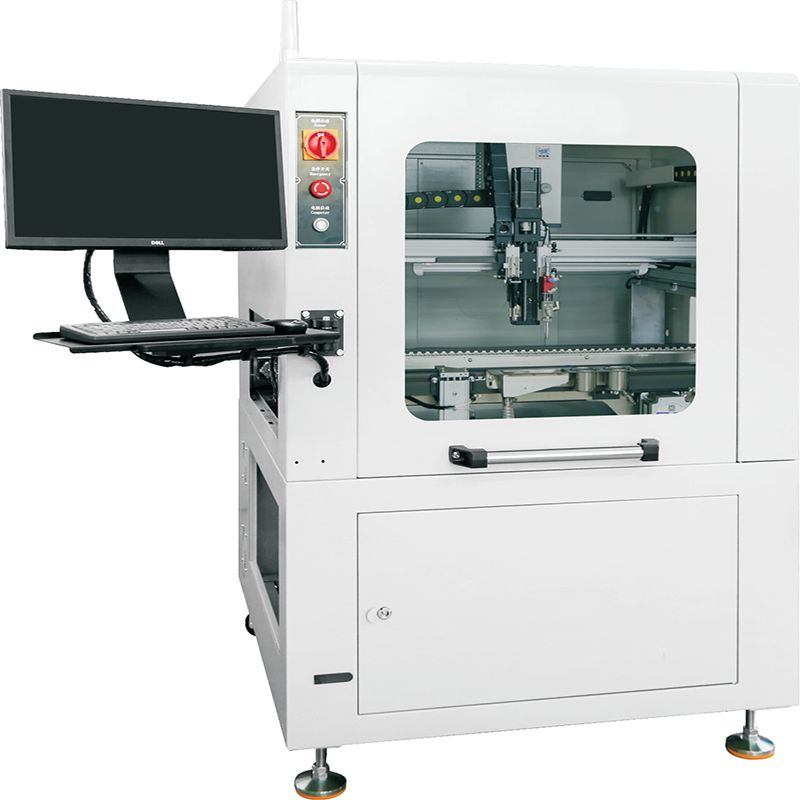
From a manufacturing perspective, automated selective coating systems (valve jet, spray, or film coating) offer far better consistency than manual spraying or dipping. Key machine specifications to prioritize:
-
Edge definition (≤0.5mm tolerance for connector keep-out areas).
-
Closed-loop flow control to prevent over-spray or voids.
-
Integrated vision alignment for high-density boards.
Conclusion: A Standard, Not an Option
For consumer toys or disposable electronics, conformal coating may be overkill. But for any PCBA destined for industrial, automotive, outdoor, medical, or high-humidity environments, it is a fundamental reliability layer.
As SMT continues toward smaller geometries and higher densities, the risk of contamination-related failures increases. Investing in a capable conformal coating process—and communicating its value to customers—sets your manufacturing apart from low-cost, low-reliability competitors.
Remember: The cheapest coating is the one applied before the first field failure.