
How to Choose the Right SMT Solder Paste Printer
How to Choose the Right SMT Solder Paste Printer
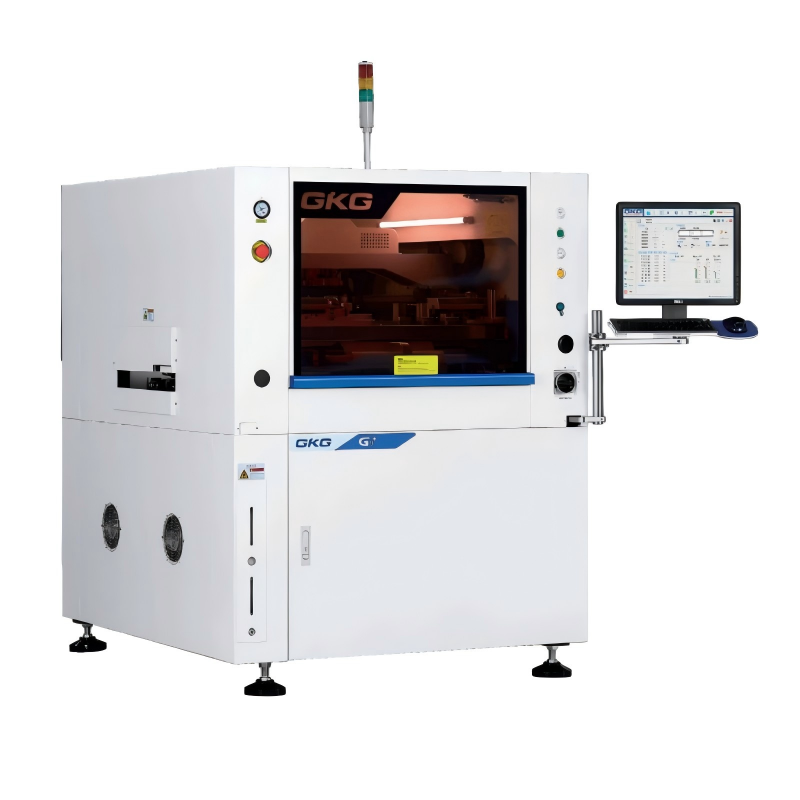
In surface-mount technology (SMT) assembly, the solder paste printer is often called the “gatekeeper” of quality. A poorly chosen printer leads to defects, rework, and hidden costs that eat into your margins. As an SMT line owner, here’s how to evaluate a solder paste printer from three critical angles – production cost, efficiency, and product quality.
1. Quality First: Precision That Defines Your Yield
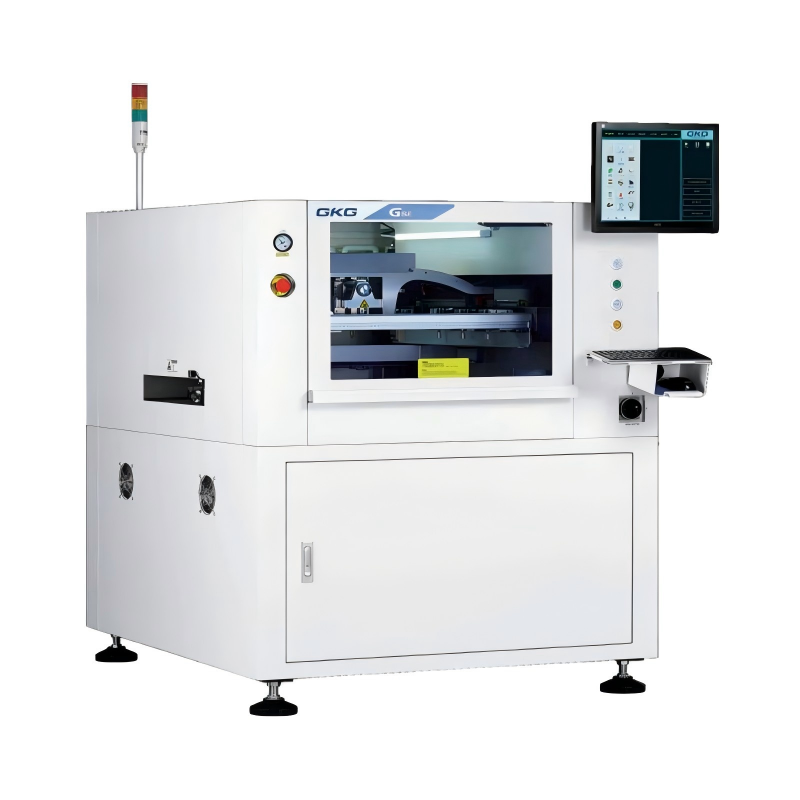
Solder paste printing machine accounts for nearly 60% of all SMT defects. To ensure consistent results, look for:
-
Alignment accuracy: A printer with ±20µm @ 6σ or better is essential for fine-pitch components (01005, 0.4mm CSP). True closed-loop alignment (X, Y, θ) with vision-based correction prevents tombstoning and bridging.
-
Repeatability: Cpk ≥ 1.0 means the machine delivers stable results across thousands of cycles. This directly reduces rework and scrap rates.
-
Stencil cleaning: Automatic under-stencil cleaning (dry, wet, vacuum) removes residual paste without stopping production. It’s a small feature that dramatically cuts short circuits on dense boards.
2. Efficiency: Throughput Without Compromise
Time on the printer is time not spent placing or reflowing. To maximize line output:
-
Cycle time: Target <10 seconds per board (including cleaning). Seek dual-lane or dual-table configurations if you run mixed or high-mix batches. Cycle time directly affects how many PCBs your line produces per shift.
-
Changeover speed: Automated tooling and stencil change (<2 minutes) is a must for high-mix, low-volume (HMLV) shops. Manual adjustments kill productivity.
-
Setup intelligence: Printer software with a library of PCB sizes and stencil thicknesses cuts changeover errors. Some systems auto-calculate squeegee pressure and speed from paste type.
3. Production Cost: TCO Over Ticket Price
A cheap printer often carries the highest long-term cost. Consider total cost of ownership (TCO):
-
Paste waste: Advanced printers use features like “paste roll compensation” and adjustable separation speed to reduce waste. Over one year, 5% less paste waste can pay for a mid-tier printer.
-
Maintenance: Open-frame designs with easy access to drives and sensors lower service hours. Avoid proprietary consumables (e.g., special cleaning paper only sold by the printer vendor).
-
Downtime cost: Calculate your line’s $/hour idle cost. A printer that jams or misaligns twice a shift quickly becomes the most expensive part of your line.
-
Training: Intuitive HMI with multi-language support reduces training time. Complex GUI increases operator errors and slows changeovers.
Matching Printer Type to Your Production Volume
| Volume Type | Recommended Printer | Key Focus |
|---|---|---|
| Prototype / Lab | Manual or semi-auto | Low entry cost, flexibility |
| Low-mix high-volume | Fully automatic, high-speed (e.g., inline) | Cycle time, uptime |
| High-mix low-volume (HMLV) | Automatic with fast changeover + smart setup | Changeover speed, paste optimization |
| Ultra-fine pitch (≥01005) | High-end closed-loop, high repeatability | Alignment accuracy, stencil cleaning |
4. Hidden Features That Impact ROI
-
Board support system (BSS): Magnetic or programmable pin supports prevent PCB flex, critical for thin or flexible boards.
-
Real-time data: Printer that logs paste height, alignment results, and cleaning frequency can feed into your MES for predictive maintenance.
-
Future-proofing: Can the printer handle larger PCBs (500mm+)? Does it support thicker pastes for power electronics?
Final Advice
Ask your potential supplier for three things before purchasing:
-
CPk report from a live demo with your PCB and stencil.
-
Mean time between assistance (MTBA) data – higher means less babysitting.
-
Reference customer running similar component pitch as yours.
The right solder paste printer doesn’t just print paste – it protects your quality reputation, lowers defect-driven costs, and keeps your SMT line moving. Invest accordingly.